A camera watches a backyard feeder in Ontario, Canada, and a computer names every visitor. Here are the two most recent — each photo carries the species and the model’s confidence baked right into the frame.
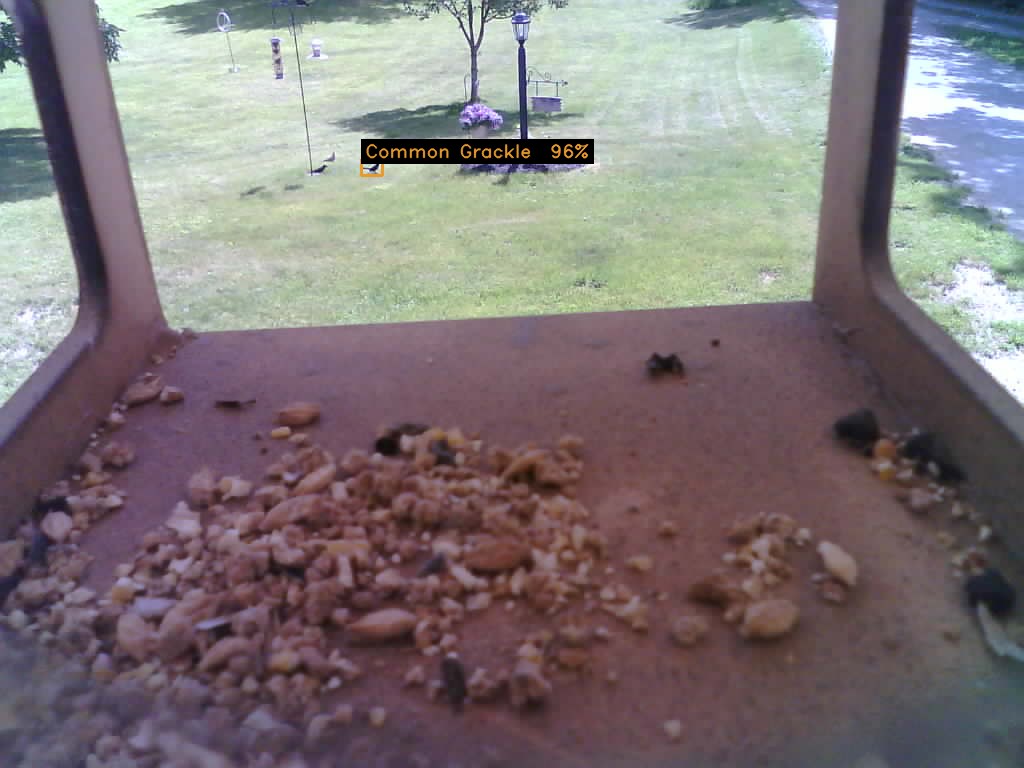
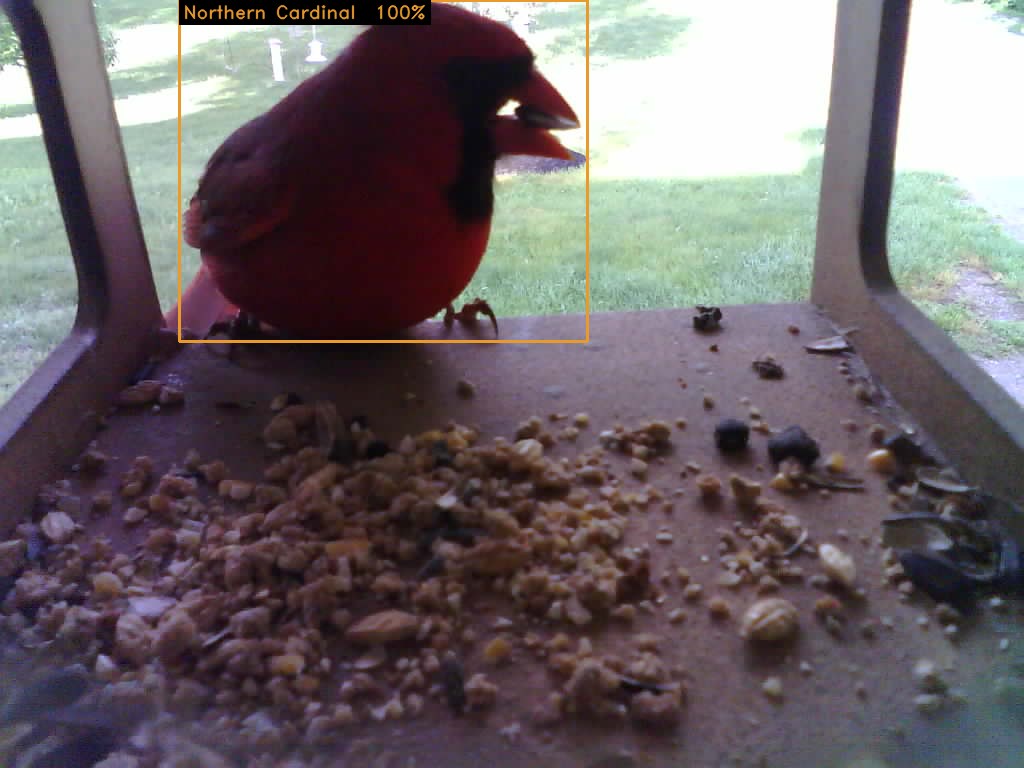
Warming up the feeder log… if nothing appears, the latest visitors are over at birdfeedercam.justinlaviolette.com.
How it works
Every time something shows up — bird or otherwise — a vision pipeline running on a home server figures out what it is and logs the visit.
- An ESP32-S3 camera at the feeder streams MJPEG over the local network.
- A home GPU box pulls that stream and runs YOLOv8n on every frame to find the critter and draw a box around it.
- The boxed crop goes to BioCLIP, an open biology vision model, constrained to a hand-curated list of species that actually turn up at an Ontario backyard feeder — chickadees, titmice, nuthatches, cardinals, jays, finches, woodpeckers, and the chipmunks and squirrels that crash the party.
- Below a confidence threshold the guess is held back rather than shown wrong. Everything above it gets a name, a confidence score, and a spot in the log.
No cloud vision API, no third-party service — the whole pipeline runs on hardware in the house.
More recent visitors
Warming up the feeder log… if nothing appears, the latest visitors are over at birdfeedercam.justinlaviolette.com.